Brick Study
Two new workshops, reiki day + other news

Once again, I offer to you a newsletter that includes many pieces of news with very little insightful writing! This is a quick missive with what I have to share this week:
On Wednesday, April 16th I’m booking private sliding-scale sessions for energy healing and ear acupuncture held at Flower World. This is something I committed last year to learning and being able to offer to community after watching the deep burnout and exhaustion that’s been happening near-universally. If you haven’t been getting sleep, are working to recalibrate your substance use, can’t seem to get grounded, or just need 45 minutes to lay down and do nothing, you can reserve a spot here—feel free to email if you have any questions beyond the information on the booking calendar page.
I’m teaching two new workshops online this month, both of which I’m very excited to share and think through together. My hope is to generate some research trip funds, but if price is a barrier, you are so welcome to join at no cost.
Next week, Tuesday April 8th
6:30-8:00pm EST virtual via zoom
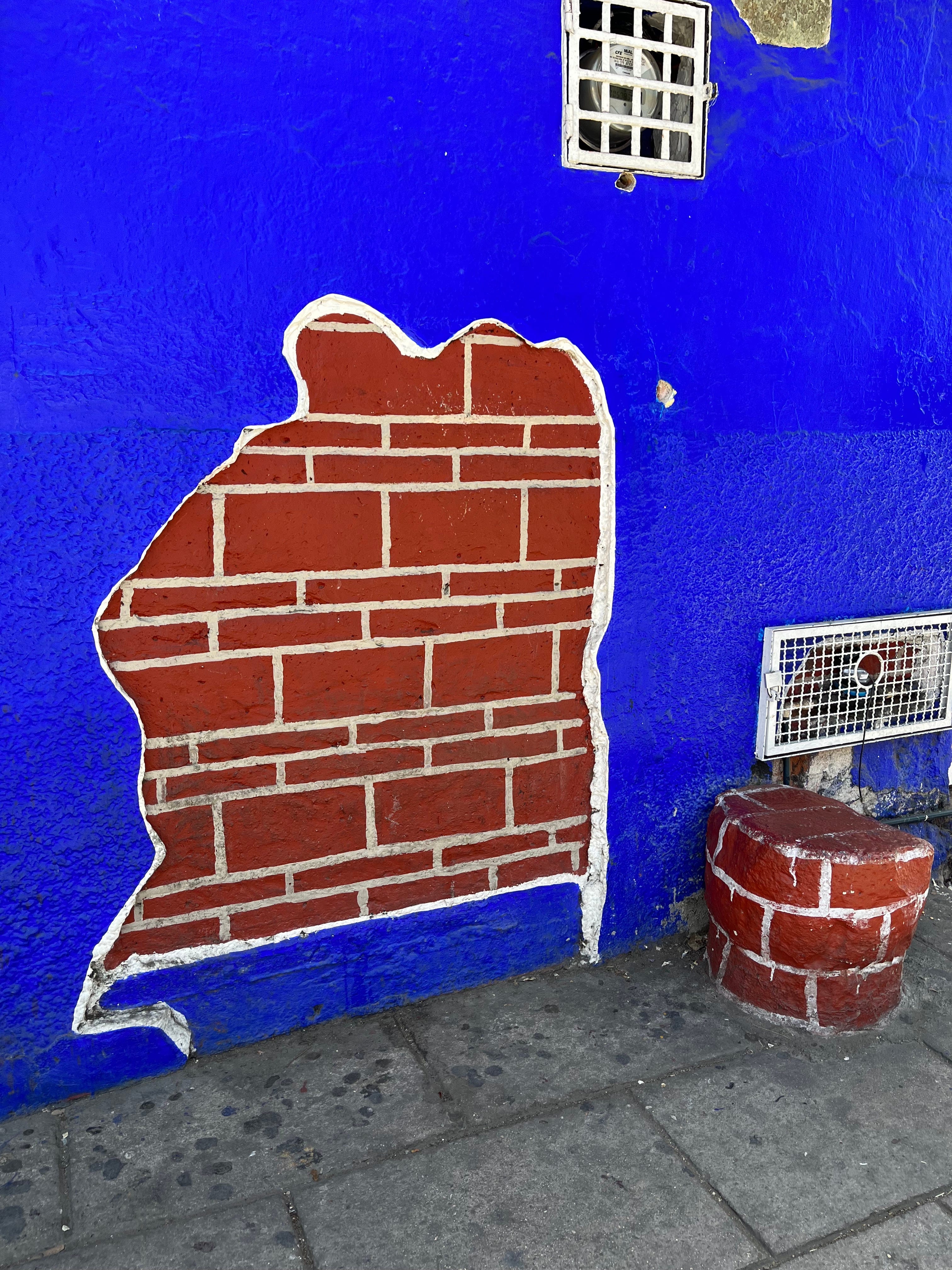
Brick Study: Looking For Windows
A presentation-style workshop sharing selections from my work on bricks throughout the past two years, with a discussion to follow. Building on my online project the brick <deep inhale>, in which I propose “the brick” as an oral history listening mechanism, I have spent the time since pursuing the brick’s mythology. How does the material exist in the radical political imagination? How did I come to know the brick as riot object, as a temporal and material tool of rupture and generation? What can the brick tell us about movement history, about labor, and about resistance?
Approaching the brick as a way of seeing, we will discuss the paradox of the brick and brick wall, the conceptual invitations and limitations of a solo brick versus a brick in formation, and ask: What do you know of bricks? Do you know a brick when you hear it? Can you feel a brick as it’s happening?
Transcription as Translation: Transforming the Aural into the Written
(I tried to make an image for this and then realized it looked like the cover to a Chicken Soup for the Oral Historian Soul book)
Monday, April 28th
6:30-8:00pm EST virtual via zoom
Transcribing is a common practice in oral history interviewing, used for publications, accessibility, and archiving. Transcription standards often exclude important auditory information such as pacing, tone of voice, or ambient sound that offers crucial information and context. What are our aims in translating a piece of recorded audio into a written text? How do we make a transcript textural, tonal, and alive?
We’ll look at the challenges of human and machinic transcription, investigating our own biases in listening and recording, and explore experimental forms of transcribing such as ethnopoetic approaches. The workshop will include a presentation and close listening and transcribing practice time. Headphones are recommended.
After reading 24 Hours in Charlottesville: An Oral History of the Stand Against White Supremacy a couple of weeks ago, I had a few sobering takeaways: the only people who took the threat seriously leading up to 2017’s Unite the Right rally were medical professionals, anarchists, and faith leaders (the book is worth reading just for the inspiring accounts of people who held direct action and safety trainings after church, among other organizing efforts), and the police really, really won’t protect you (though we knew this). Hearing firsthand accounts from people who watched police tanks block access roads for the ambulances trying to administer aid after the car attack on protestors made me feel even more urgently about learning emergency wound care. I took a virtual Stop the Bleed workshop through the Brooklyn Public Library, which happens the first Wednesday of every month, and highly recommend taking one of theirs or finding another through stopthebleed.org.
This Saturday, April 5th is the Writers Against the War on Gaza Town Hall: Free the People, Free the Land featuring panels, workshops, raffles, readings, food and more to benefit Palestine Shield and Thamra. 2-9pm at 124 Henry Street, Brooklyn NY 11201
RAPP (Release Aging People in Prison) is holding a Clemency Rally against mass incarceration at the Governor’s office on Monday, April 7th from 10:30am to 12pm. Join them and learn about their work here.
My dear friend Freeman @sendhealedpics is doing a tattoo pop-up at Corto After Dark on Thursday, April 10th from 6-11pm, come say hi.
Upcoming guests tattooers at Flower World:
Quiara Capellan @qviara is here for the next week <3
May 1st ~ Monica @ricemilkmotattoos
May 2nd through 3rd ~ En Strader @inkportals
Also in May: Pony @slowpony69, Pluto @puppypuppylove1, Eoin McGraw @eoin_mcgraw
Listening: Prison Radio on Red Onion special collection
Watching: The Transsexual Menace documentary via Internet Archive
Secret Mall Apartment on view at IFC – a doc about a group of artist friends who found and occupied an empty space in a Providence Mall in the early 2000s
Reading: Germany Turns to U.S. Playbook: Deportations Target Gaza War Protesters by Hanno Hauenstein
Columbia Students Chain Themselves to Gates to Protest University Collaboration with ICE via Democracy Now
Parsing Anti-Hamas Protests and Pro-Israel PR Muhammad Shehada in conversation with Mari Cohen
Street Justice: A History of Police Violence in New York City by Marilynn S. Johnson
Archive: Rough Times: A Journal of Radical Therapy, produced in the 1970s
Holding onto: The imagery of this line from an archival article on the 1979 Iranian prison break, the largest prison break in history:
“They threw thousands of pairs of handcuffs into the air and set fire to administration buildings and prison blocks.”
~~~~~~~~~~~~~~~~~~
Thank you for reading as always <3